
A construction subcontract agreement is the contract between a general contractor and a subcontractor for one part of the work on a project. It sets what the subcontractor will do, what it will be paid and when, and what happens when something changes or goes wrong.
In this post we go through what a subcontract agreement should include, clause by clause, and what to keep track of once it is signed. Then we show how contracts work in Cloud PM.
What Is a Subcontract Agreement?
On most projects, the owner signs one contract with the general contractor, called the prime contract. The general contractor then hires subcontractors for the parts of the work it doesn’t do itself, such as the steel, the electrical or the drywall, and signs a subcontract agreement with each one.
The subcontractor has no contract with the owner. Its agreement is with the general contractor, so the subcontract has to give the subcontractor the same obligations the general contractor has to the owner for that part of the work. A subcontractor can also hire its own subcontractors, with a sub-subcontract agreement.
This post is general information, not legal advice. Laws on construction contracts differ by state, so have an attorney review your subcontract agreement before you use it.
What to Include in a Construction Subcontract Agreement
The Parties and the Project
The names of the general contractor and the subcontractor, the project and its address, and the owner. The agreement should also list the contract documents that are part of it, such as the drawings, the specifications and the prime contract.
The Scope of Work
What the subcontractor will do, with the drawings and specification sections that cover it. Say what is not included as well, and who provides the materials, equipment, permits and cleanup. Most disputes between a general contractor and a subcontractor start with a scope that wasn’t clear.
The Price
The subcontract amount, as a lump sum or as unit prices for each quantity of work, and whether it includes taxes.
Payment Terms
When the subcontractor submits its pay application, usually each month against a schedule of values, and when it gets paid. Many subcontracts tie the payment to the owner’s payment. With a pay-when-paid clause, the subcontractor is paid within a set time after the owner pays the general contractor. With a pay-if-paid clause, the subcontractor is paid only if the owner pays. Some states don’t enforce pay-if-paid clauses.
Retainage
The percentage held back from each payment, and when it is released, such as at substantial completion or when the subcontractor’s work is accepted. Learn more about retainage in construction.
Changes to the Work
How a change is requested, priced and approved. The subcontract should say that the subcontractor is paid for a change only with a written change order, and how much time it has to submit its price.
The Schedule
When the subcontractor starts, how long its work takes and how it coordinates with the other trades. Say what happens when the work is late, including any liquidated damages from the prime contract that pass down to the subcontractor.
Insurance and Indemnification
The insurance the subcontractor must carry, with the limits, and that the general contractor and the owner are added as additional insureds. Ask for the certificate of insurance before the subcontractor starts work. The indemnification clause says who pays for a loss or a claim caused by the subcontractor’s work.
Lien Waivers
The subcontractor gives a lien waiver with each payment, so the owner’s property is protected from a lien for work that was already paid.
Warranty
How long the subcontractor is responsible for fixing defects in its work. It usually matches the warranty in the prime contract.
Termination and Disputes
When the general contractor can end the subcontract, for default or for its own convenience, and what the subcontractor is paid then. Say how disputes are resolved: by negotiation, mediation, arbitration or in court, and where.
The Flow-Down Clause
The flow-down clause binds the subcontractor to the general contractor in the same way the general contractor is bound to the owner, for the subcontractor’s part of the work. It is what makes the prime contract’s requirements, such as its schedule, its quality standards and its paperwork, apply to the subcontractor.
Using a Standard Form: AIA A401
Many general contractors start from a standard form instead of writing a subcontract from scratch. The most common one is AIA A401, the Standard Form of Agreement Between Contractor and Subcontractor. It is written to work with the AIA prime contract and its general conditions, so the subcontract and the prime contract use the same terms. Learn more about AIA Contract Documents.
After the Agreement Is Signed
Signing the subcontract is the start. Over the project, you need to keep track of:
- Changes. Each approved change order adds to or deducts from the subcontract amount. The original amount plus the approved changes is the subcontract sum to date. Learn more about change orders in construction.
- Pay applications. Each month, the subcontractor bills against its schedule of values, up to the subcontract sum to date. See how payment applications work.
- Retainage and lien waivers. What you have held back so far, and a lien waiver for every payment.
- The signed documents. The signed agreement and every signed change, so everyone works from the version that was actually signed.
Tracking Subcontracts in Cloud PM
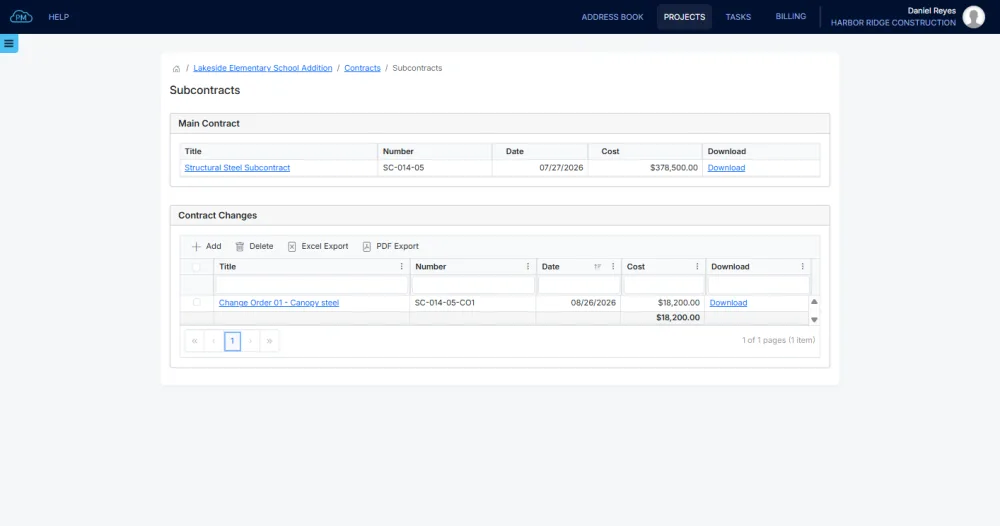
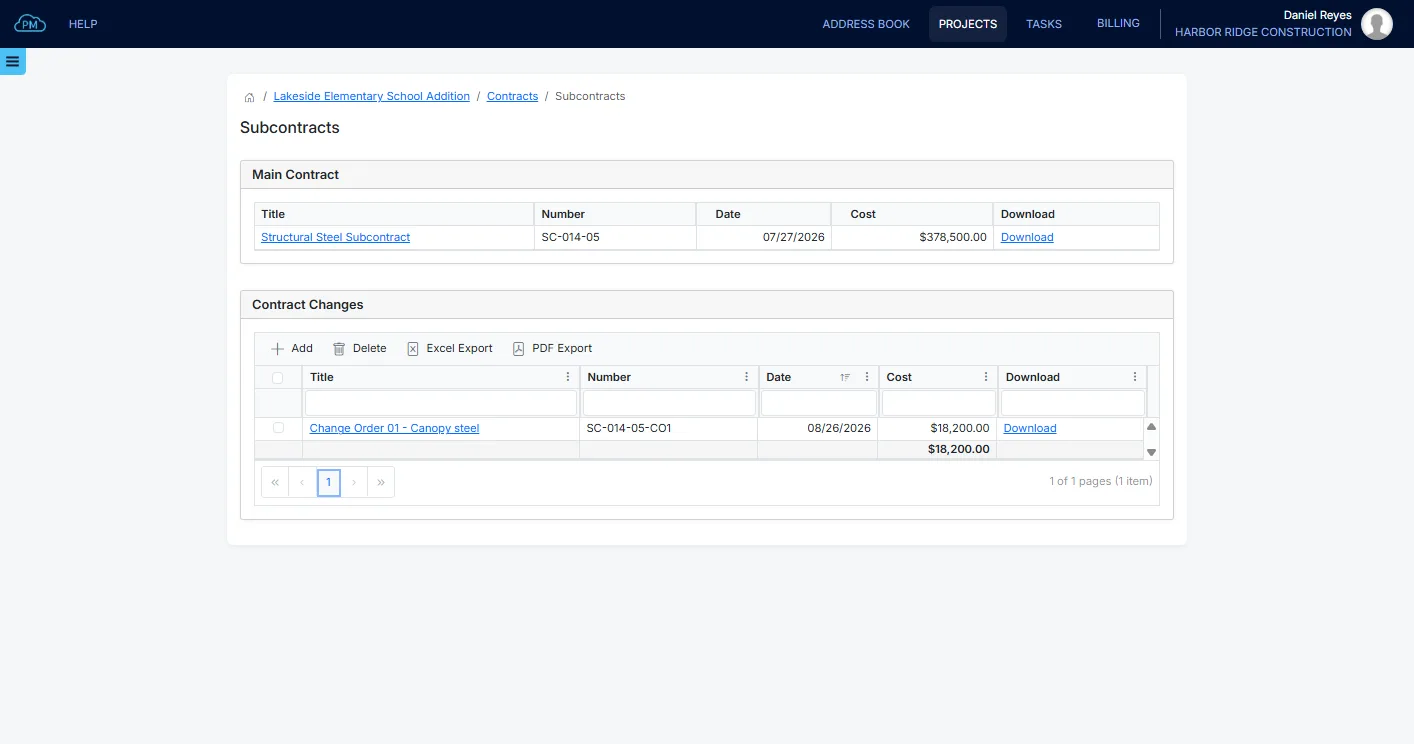
In Cloud PM, every contract is saved with its project, from your contract with the owner to the subcontracts with your trades. When you add a subcontract, you select the subcontractor from the companies on the project and the spec section of its work, so you can see which part of the project each subcontractor is responsible for.
For each subcontract, you can enter the amount and date and attach the signed agreement. When a change is approved, you can add it under Contract Changes with its amount and the signed document, and Cloud PM updates the subcontract’s total. Anyone on the project with access can open the signed documents.
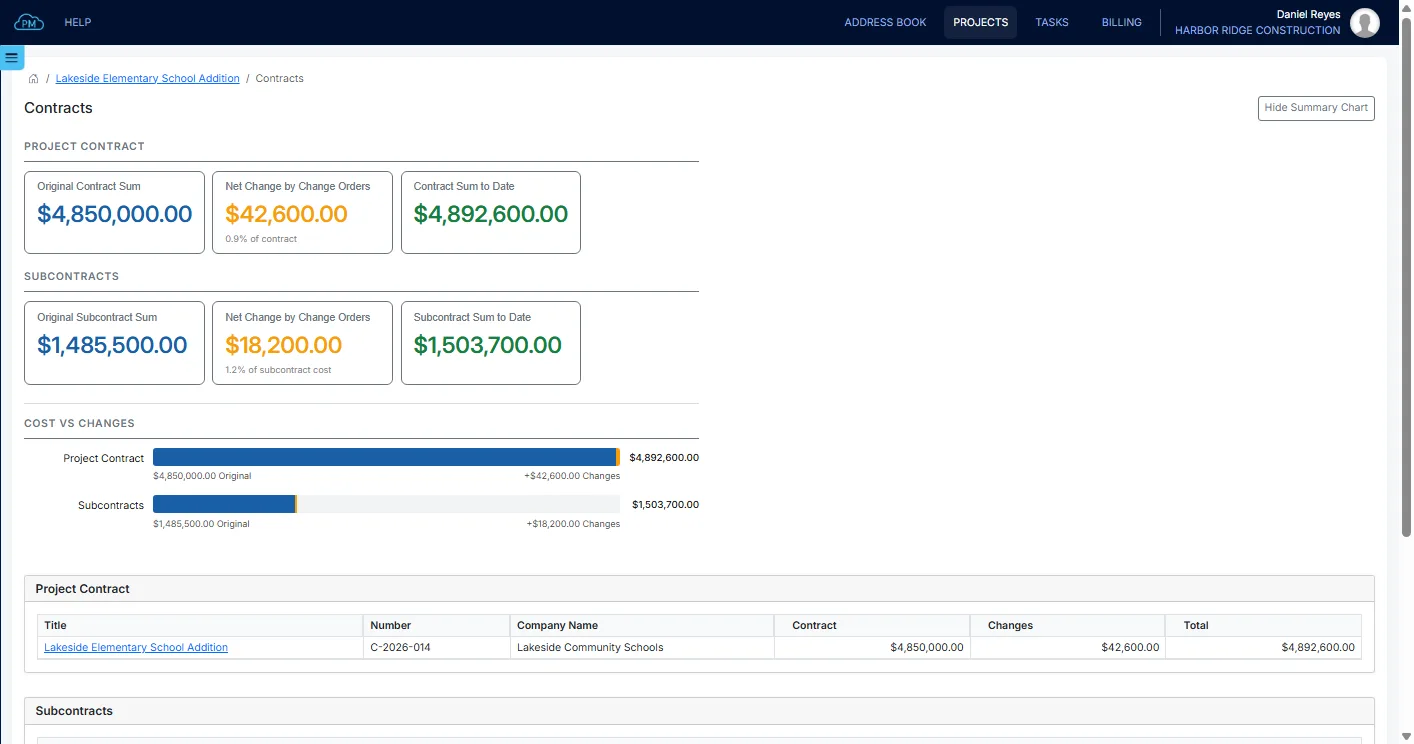
With the summary chart, you can compare the totals for your contract with the owner and for all your subcontracts: the original sum, the net change and the sum to date. You can see the net change as a percentage of the contract, so you know right away how much your subcontracts have changed since they were signed.
Your contracts are saved in the same project as your payment applications and change orders. The other companies on the project use Cloud PM free of charge, and plans start from $40 a month. Learn more about Cloud PM construction contract management.
Frequently Asked Questions
What is the difference between a prime contract and a subcontract?
The prime contract is between the owner and the general contractor and covers the whole project. A subcontract is between the general contractor and a subcontractor and covers one part of the work. The subcontractor has no contract with the owner.
What is a sub-subcontract agreement?
It is the agreement between a subcontractor and a company it hires for part of its own work, such as an electrical subcontractor hiring a low-voltage company. It should flow down the same requirements the subcontractor agreed to with the general contractor.
What is the difference between pay-when-paid and pay-if-paid?
With pay-when-paid, the subcontractor is paid within a set time after the owner pays the general contractor, and is still paid if the owner pays late. With pay-if-paid, the subcontractor is paid only if the owner pays. Some states don’t enforce pay-if-paid clauses, so check the law where the project is.
Can a subcontract change after it is signed?
Yes, with a written change order signed by both parties. The change order states the new work or the deduction, the amount and any change to the schedule. The original amount plus all approved changes is the subcontract sum to date.