
RFI Software
With Cloud PM's construction RFI software, you can keep every request for information and its answer in one place. Nothing gets missed, and every team member has access to the latest information.
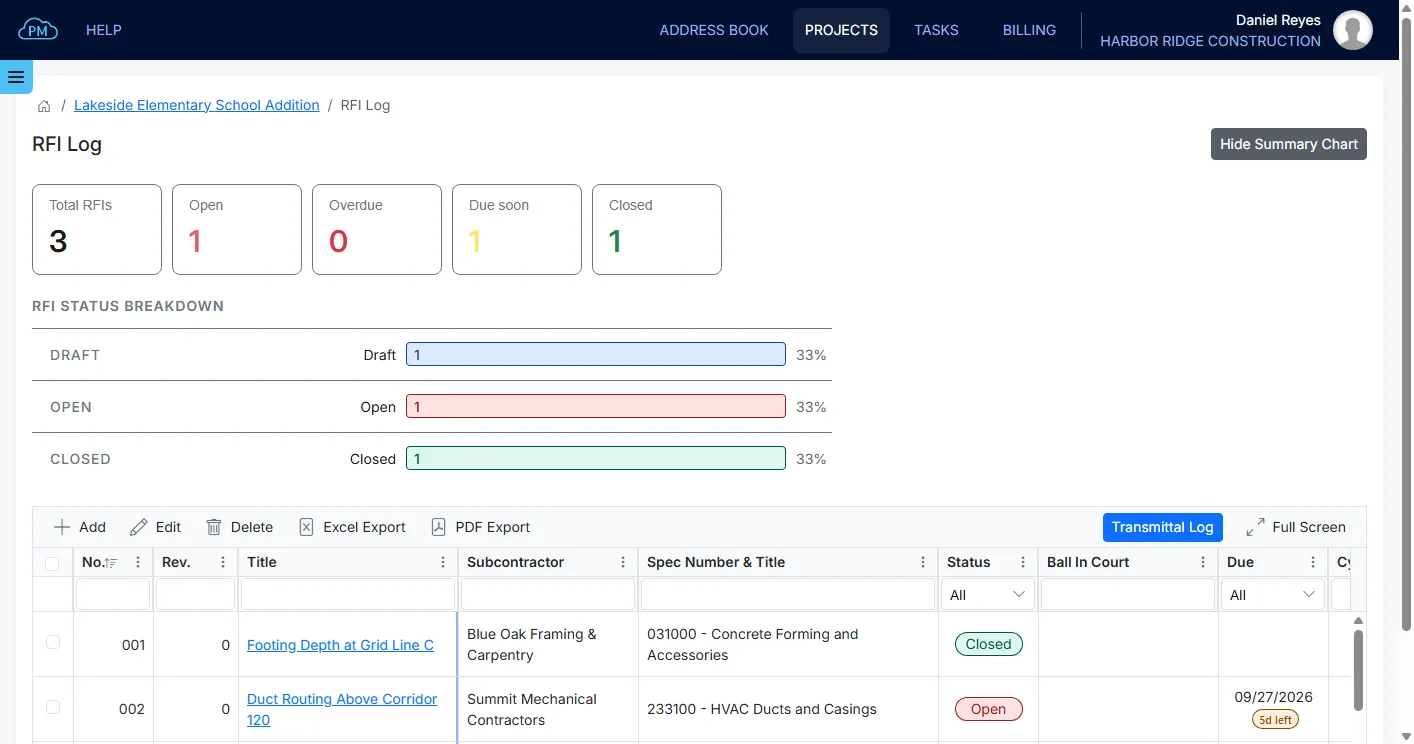
Every Question on the RFI Log
The answer to an RFI often changes the work on site, so you need a clear record of the question and the answer. Some teams call it the RFI log, others the request for information log or the RFI tracking log, but it is the same record. Cloud PM's construction RFI software assigns a number to every RFI and links it to its specification section and to the subcontractor who asked the question. You always know who has to act next and when the answer is due. With a status of Draft, Open or Closed on each RFI, you know which questions are still waiting for an answer.
-
Quick Filtering
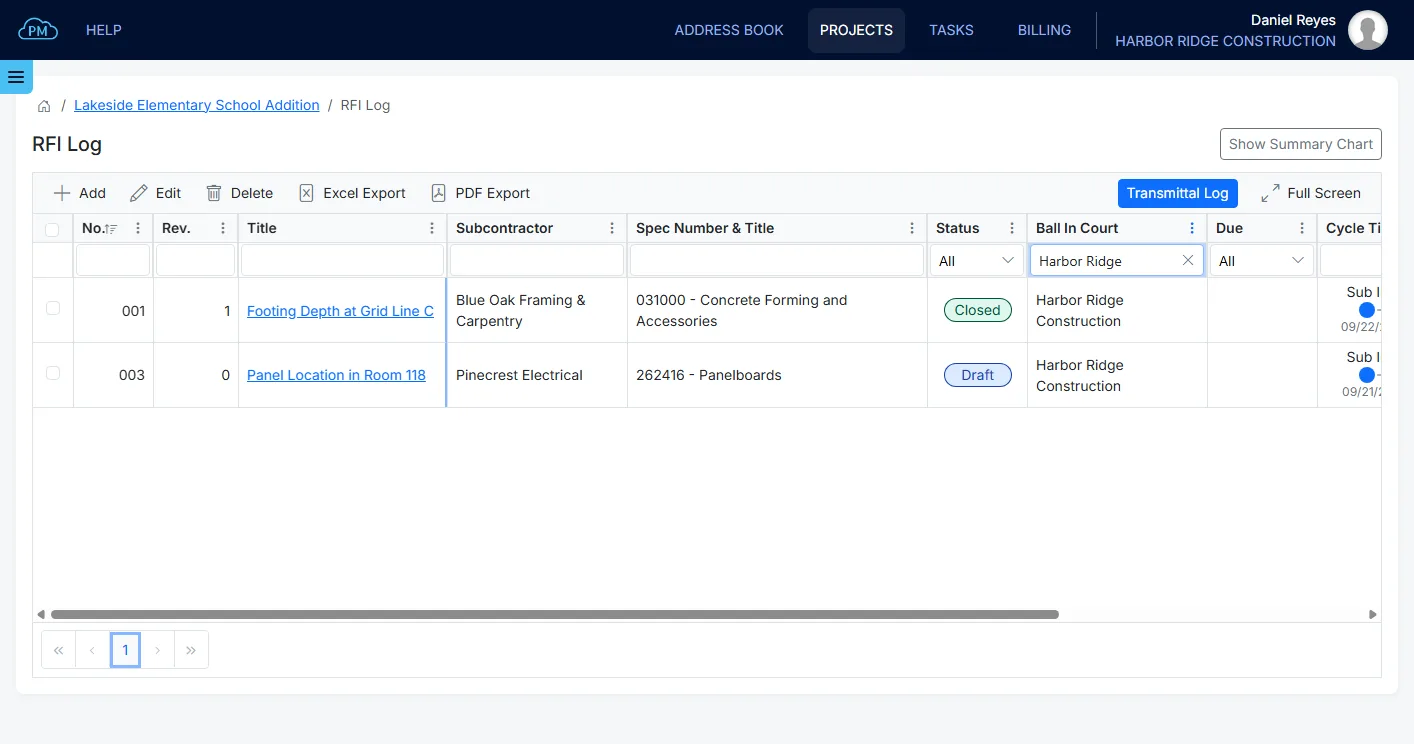
You can filter the log by status, by Ball In Court, or by how close the due date is. You can also see only the RFIs that are a week or more overdue.
-
Due Date Tracking
Each step has its own due date, and Cloud PM sends a reminder a set number of days before it, so you can follow up before the answer delays the work.
-
Instant File Access
You can download the question, the answer and the transmittal for each revision directly from the log, without opening the RFI.
RFI Status Summary
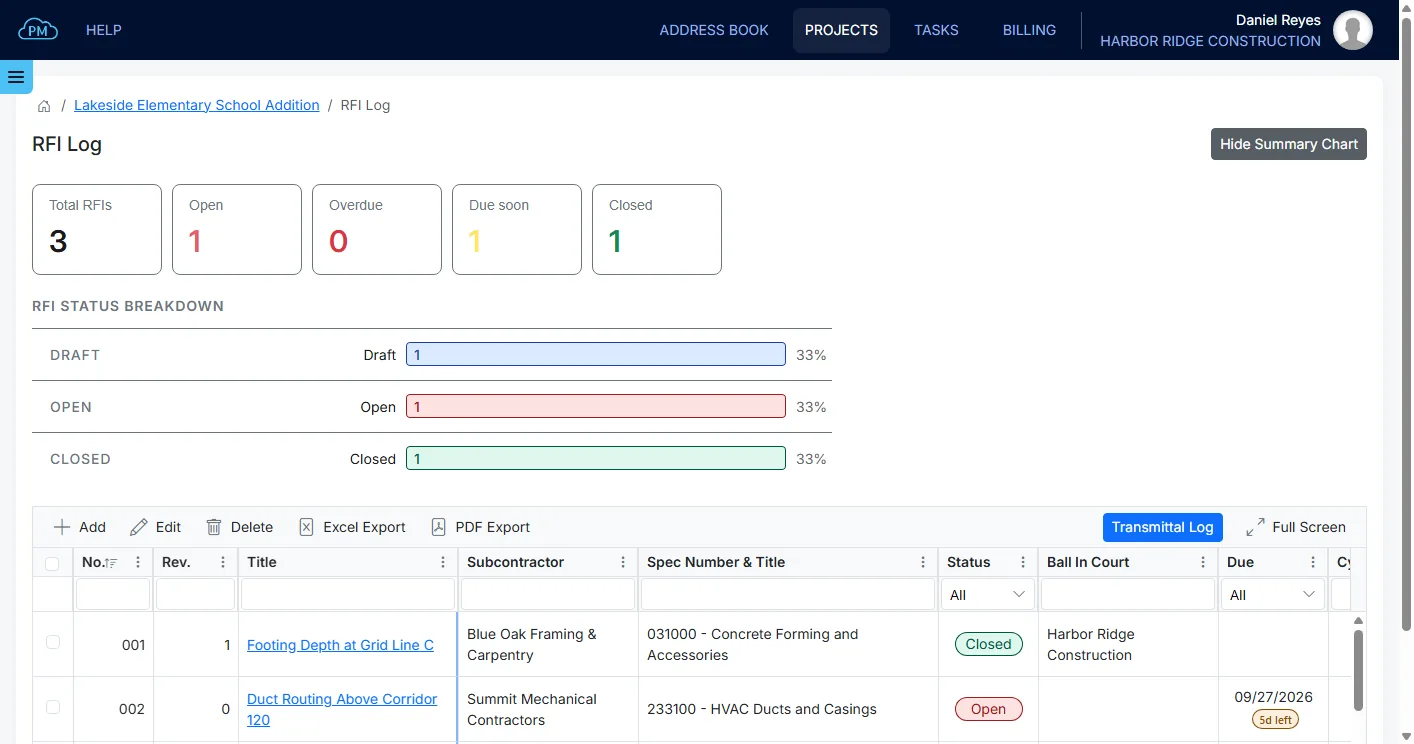
Cloud PM shows how many of the project's RFIs are open, overdue or due soon. You can see the same numbers by status in the RFI Status Breakdown chart, including whether the open RFIs were sent yesterday or have been waiting for weeks. That way you know which answers to follow up on first.
Cycle Timeline
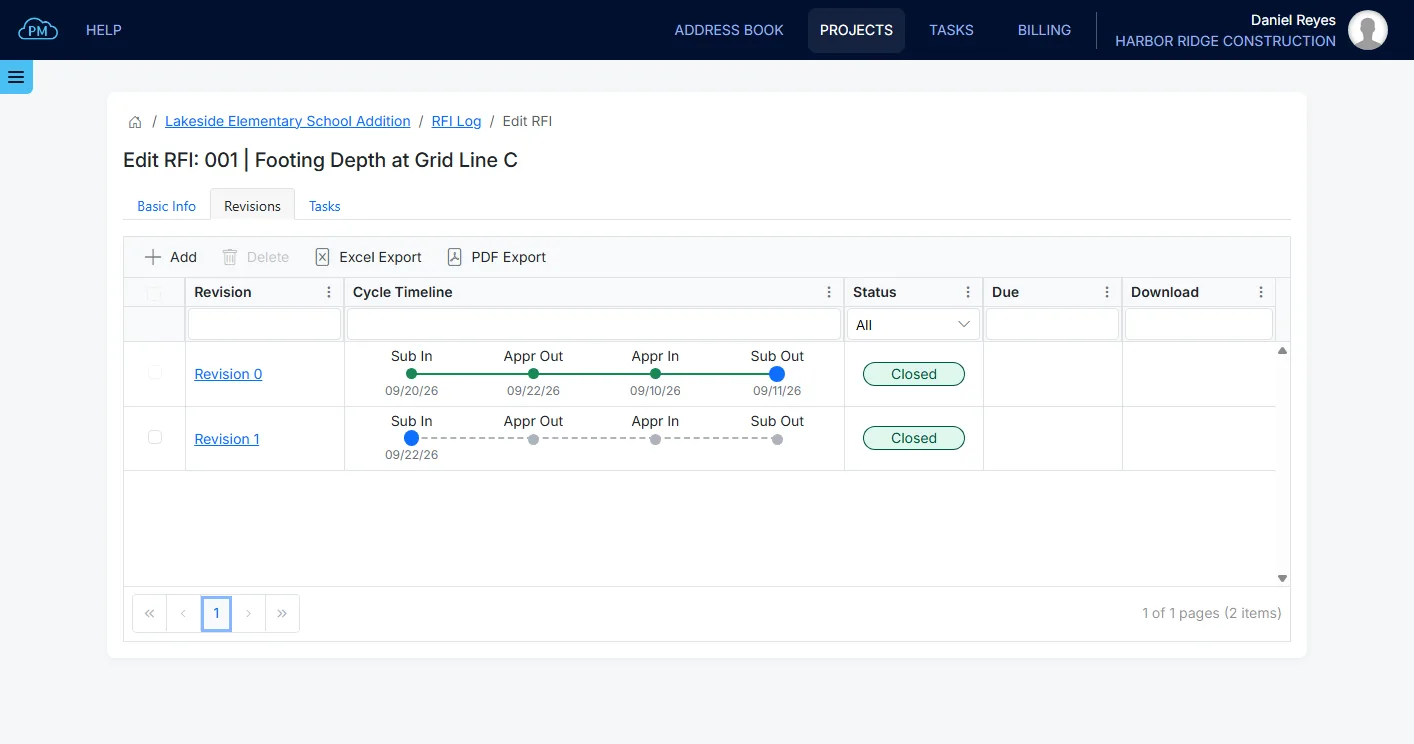
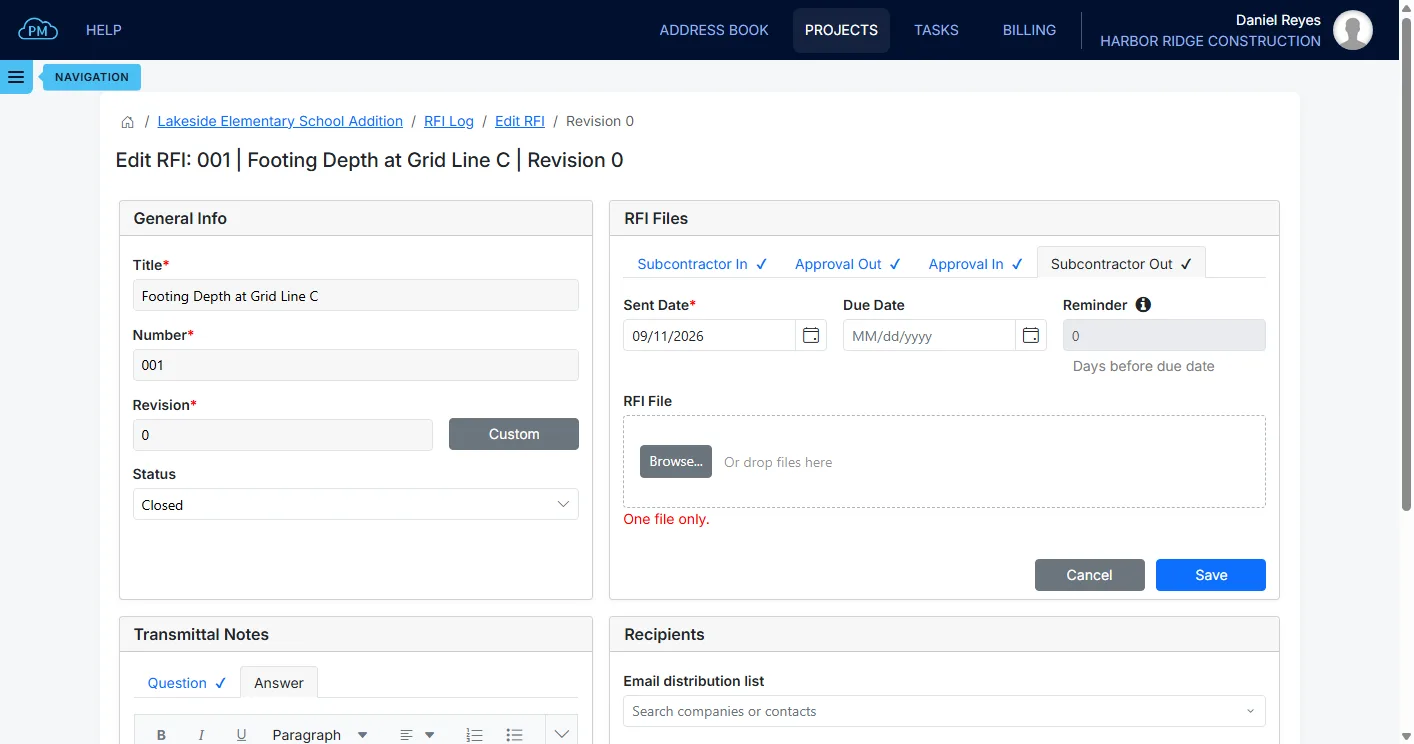
With the Cycle Timeline you can follow each RFI from the question to the answer. It shows the date of each of the four steps, from the day the subcontractor asked the question to the day the answer was returned to them. You can enter a step's date only after the previous step has one, so the log always shows which step each RFI is at.
Ball In Court
With Ball In Court you always know who has to act next on each RFI. That is your team while the RFI is being prepared, the architect or engineer until they answer it, and the subcontractor once the answer is returned. You can filter by Ball In Court to prepare the list for your next coordination meeting.
From Question to Answer
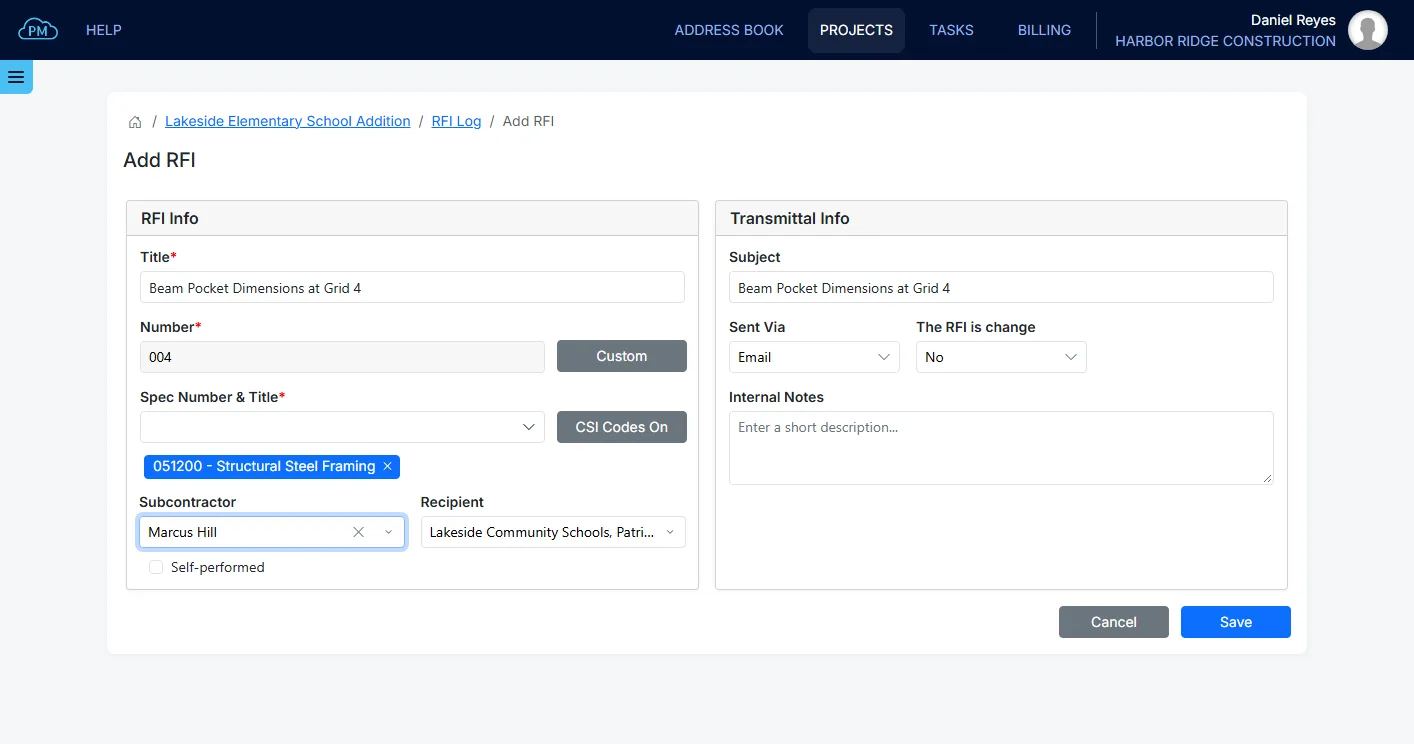
To create an RFI, you only need a title, a specification section and the name of the person who asked the question. Cloud PM assigns the RFI number, adds the recipient from Project Info and creates Revision 0 automatically.
Raise the RFI
When you create a new RFI, you enter its title and select the specification section, and Cloud PM assigns the RFI number automatically. You can select the section from Cloud PM's built-in MasterFormat list, or enter your own if the one you need is missing. You then select the subcontractor who asked the question, or mark it as self-performed when the question comes from your own crew. The Recipient is copied automatically from Project Info. You can add notes for your team in Internal Notes, and they are not printed on the transmittal.
Files and Revisions for Every RFI
Each revision of an RFI has four steps, and you can add a date and a file for each one. That way you keep every version, from the original question to the answer returned to the person who asked. Cloud PM unlocks the steps in order and marks the completed ones, so the dates on each RFI are always in the right order. When an answer leads to another question, you can add a new revision with its own dates and files. Cloud PM keeps every earlier revision and its timeline under Revisions, so months later you can show exactly when an answer was received. You can also create tasks for your team from the RFI's Tasks tab, and they appear on the Tasks & Reminders page too.
Generate and Send the RFI
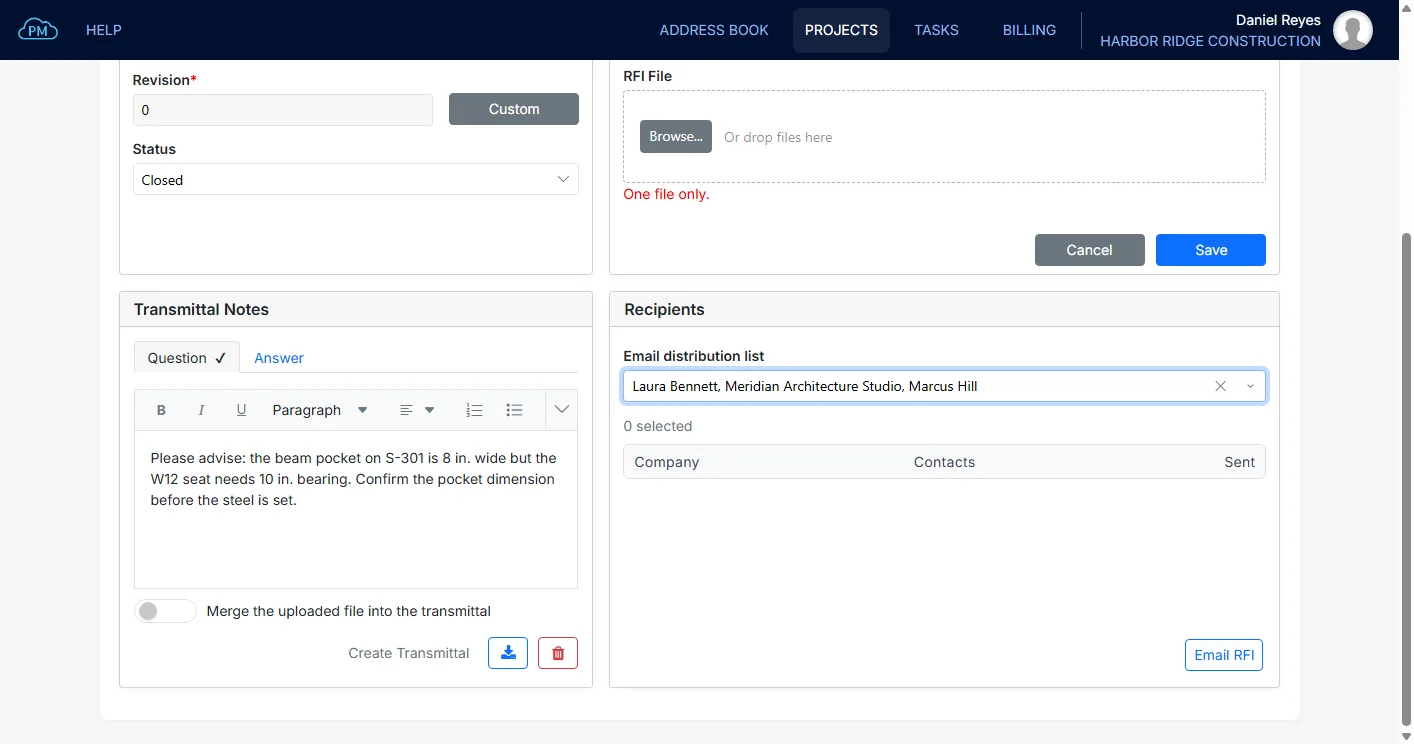
You can add a Question for the architect and an Answer for the subcontractor in the Transmittal Notes. Both belong to the same revision, so the architect and the subcontractor each get their own notes instead of a forwarded email thread.
Cloud PM prepares the transmittal sheet as a PDF from the information already on the RFI. You can merge that step's file into it, so the reviewer opens one attachment instead of two. You then email it to the contacts you choose from the project directory, and Cloud PM records who received it and when. Cloud PM keeps every sent transmittal in the Transmittal Log, so you always know when the answer was sent to the person who asked. Architects and other outside users have free accounts, so they can read and answer RFIs at no cost.
Why Choose Cloud PM for RFI Management
Most RFIs are answered by people outside your company, so Cloud PM's construction RFI software keeps a record of who asked what, when, and what the answer was. Pricing does not change as you add projects, and you can set separate permissions for your own staff and for the architects, engineers and subcontractors on the project. Plans start from $40 a month.
-
Audit-Ready RFI Records
Cloud PM keeps every question, answer and transmittal on the RFI, with the date of each step and a record of who received what. If there is a dispute months later, the RFI log is your evidence, so you don't have to search through emails. You can export the log to Excel or PDF for a claim, an audit or a closeout package.
-
Software That Scales With You
Plans start from $40 a month, and you can use the same software on a single renovation or on a campus with hundreds of open RFIs. Your price doesn't change as you add projects. The architects and engineers who answer your RFIs have free accounts, so adding the design team costs you nothing.
-
Your Team, Clear Permissions
You can give your own users Read, Write and Delete permissions for each project. Outside users, like the subcontractor who asked the question and the architect who answers it, get free accounts with Read and limited Write access. Everyone works from the same RFI log, and nobody sees more of your project than they need.
Construction RFI Software FAQ
An RFI, or request for information, is a formal question raised during construction when the drawings or specifications are unclear or missing information. The contractor sends it to the architect or engineer, and the answer becomes part of the project record.
An RFI log is the project's list of every question raised against the drawings and specifications. It records who asked it, who has to answer, when the answer is due and what it said. It is also called a request for information log or an RFI tracking log. A project manager checks it to see which questions are delaying the work.
Usually the architect or the engineer of record, depending on what the question covers. The general contractor raises it, often on behalf of a subcontractor, and sends the answer back to the subcontractor who asked.
An RFI asks a question about what the documents require. A submittal proposes what will be installed and asks for approval of it. Both are sent between the subcontractor, the contractor and the design team, which is why Cloud PM tracks them the same way.