
Construction Change Orders
With Cloud PM you can manage construction change orders from the first pricing request to the owner's approval. You can collect a proposal from every subcontractor affected by the change, then submit one change order for approval. The costs, files and dates are all kept on the change order.
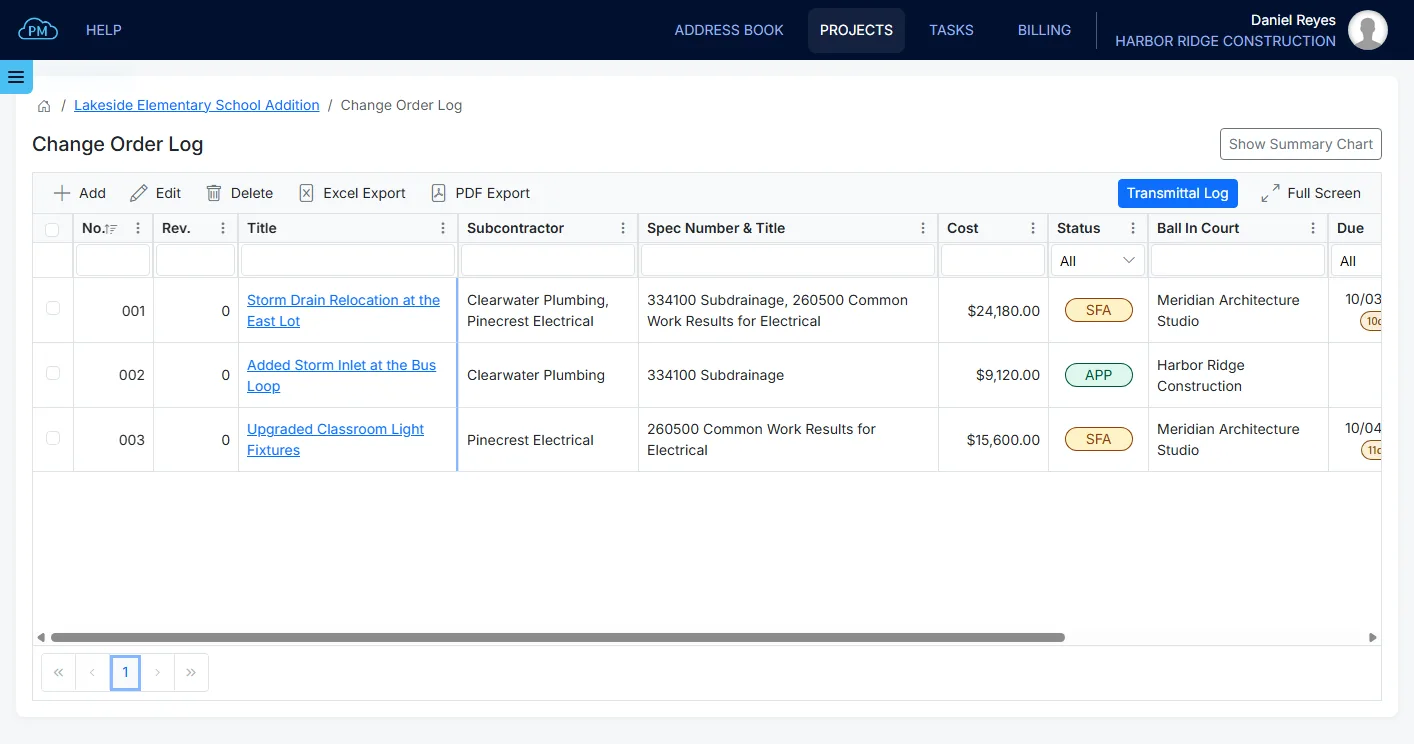
Every Change on the Log
A change order starts as a proposal when the work on site differs from the drawings and specifications. The proposal needs a cost before the owner can approve it. Cloud PM keeps the subcontractor costs and the owner's approval together in the Change Order Log, so you can support the cost you submit to the owner.
-
Quick Filtering
You can filter the log by status, from Draft and Sent for Approval to Approved, by Ball In Court, or by what is overdue.
-
Due Date Tracking
Every step has its own due date and a reminder, so you can follow up on a cost or a decision before the change delays the work.
-
Instant File Access
You can download proposals, approvals and transmittals directly from the log, each with its cost.
Change Order Status Summary
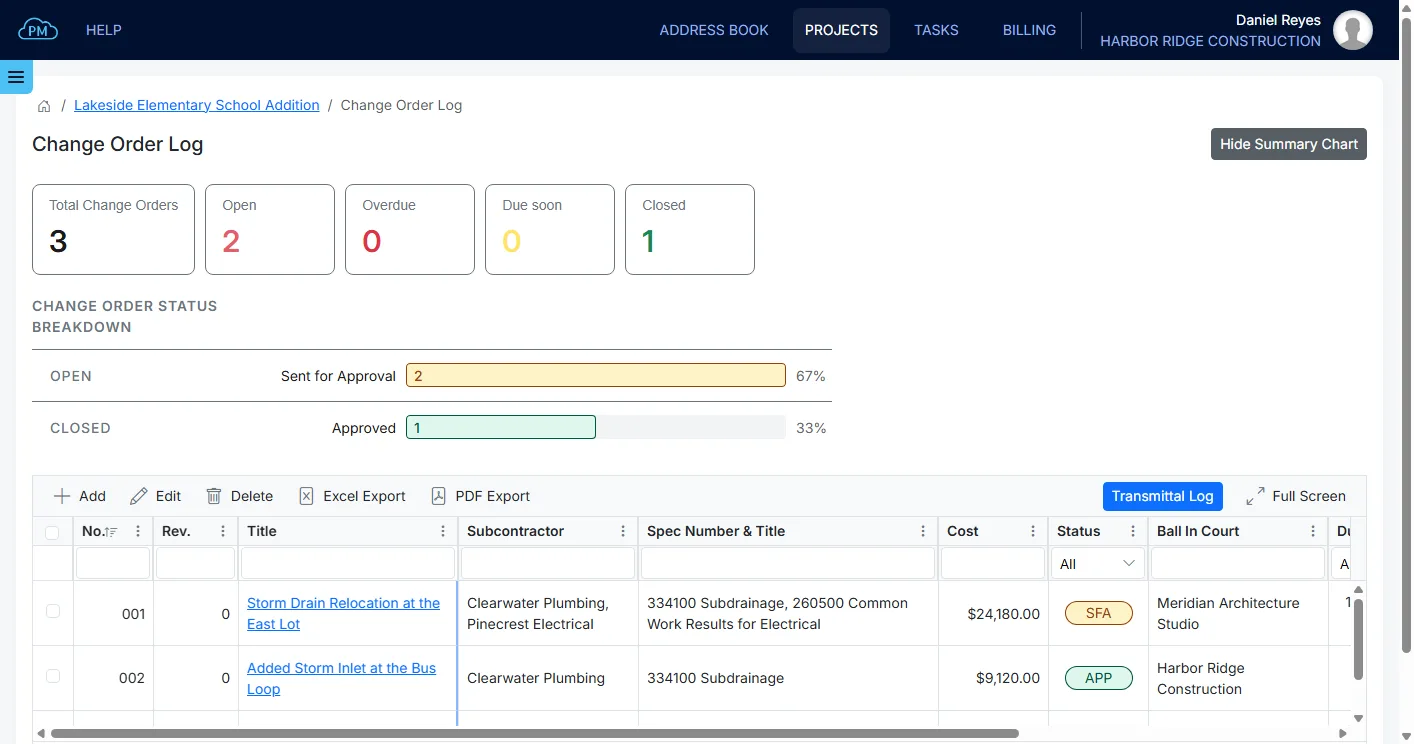
Cloud PM shows how many of the project's change orders are open, overdue or due soon. You can also see them by status in the Change Order Status Breakdown chart, from Draft to Approved or Rejected, so you know how much money is still waiting on a decision.
Cycle Timeline
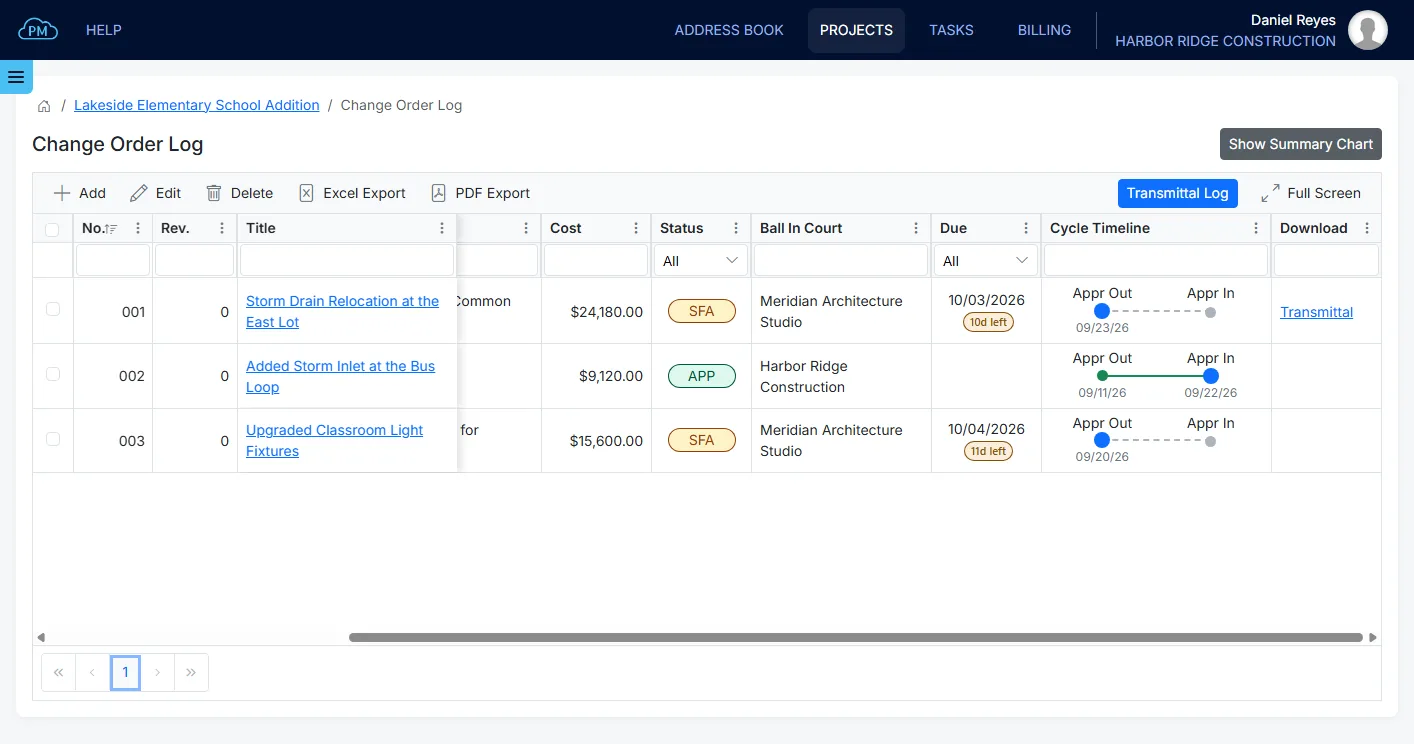
A change order goes through more steps than an RFI. It is sent to the subcontractors for pricing, returned with their proposals, and then submitted to the owner or the architect for approval. Cloud PM records when the current revision was submitted for approval and when the answer was received, so you can see which changes are still waiting on the owner.
Ball In Court
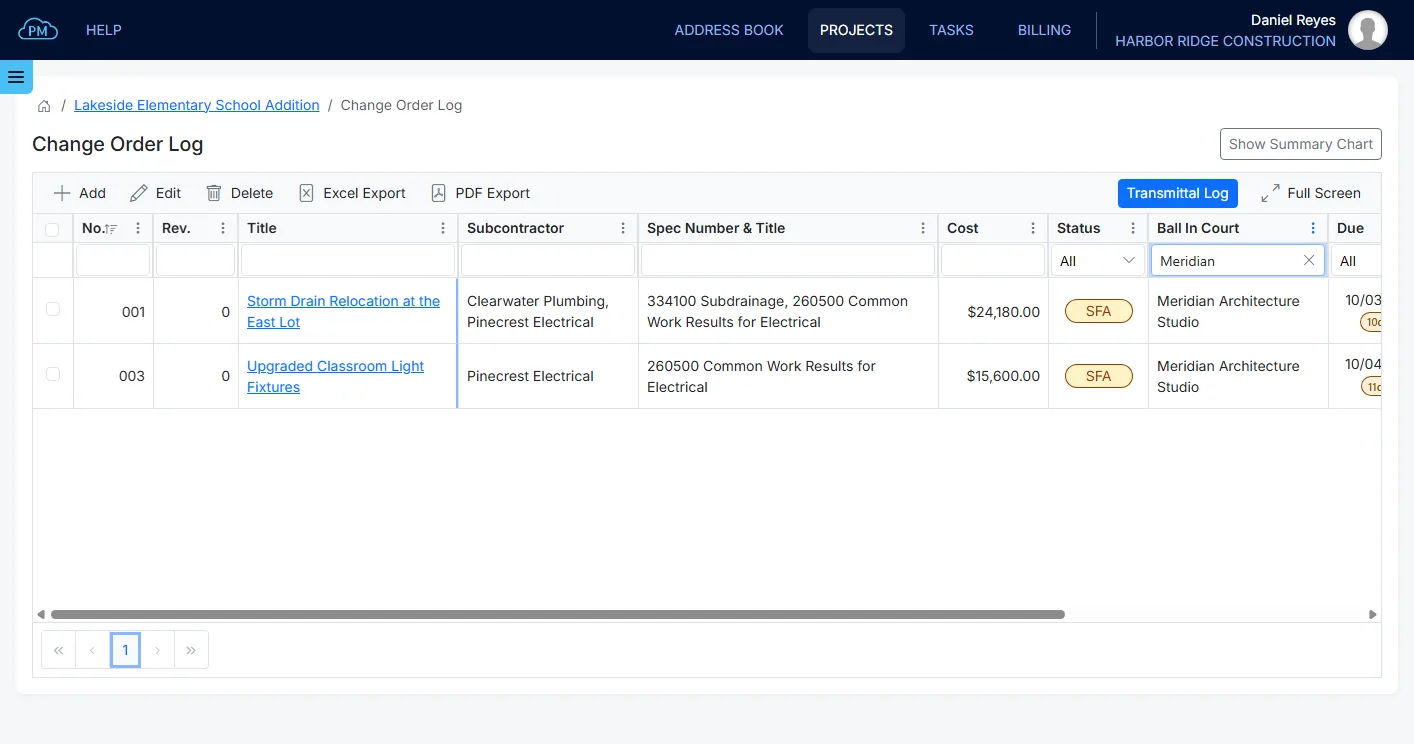
With Ball In Court you always know who has to act next on each change. That is your team while the change order is being prepared, the subcontractor while a proposal is outstanding, and the owner or the architect while they review it. You can filter the log by Ball In Court to see every change order waiting on one party.
From Pricing to Approval
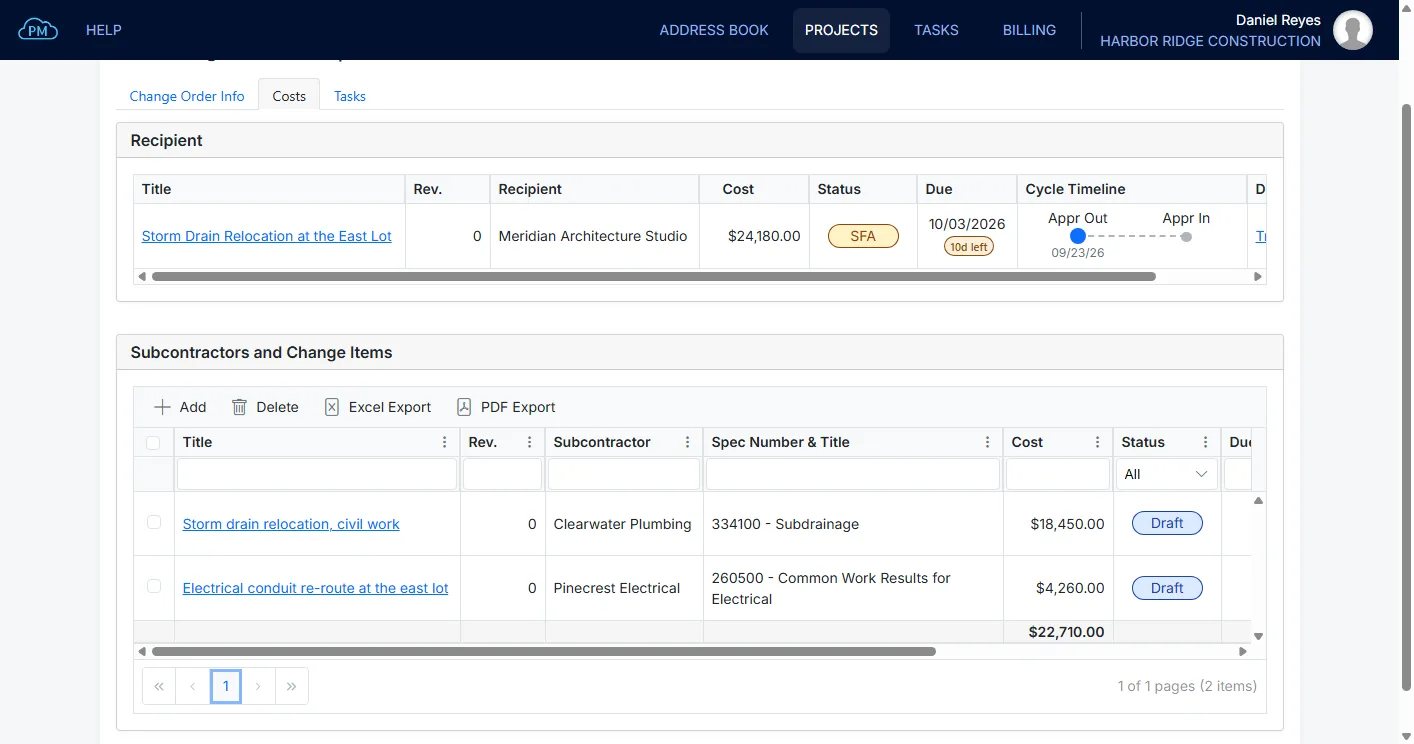
Each change order in Cloud PM has two parts. The subcontractors submit their costs for the change, and the recipient, usually the owner or the architect, approves the change order you prepare from them.
Collect the Subcontractor Proposals
You can add every subcontractor affected by the change under Subcontractors and Change Items, each with the contact who receives the pricing request. Each subcontractor has its own revisions, so every proposal and its cost are kept with the transmittal you sent. When your own crew does the work, you can mark it as self-performed, and its cost is still included in the total.
Submit It for Approval
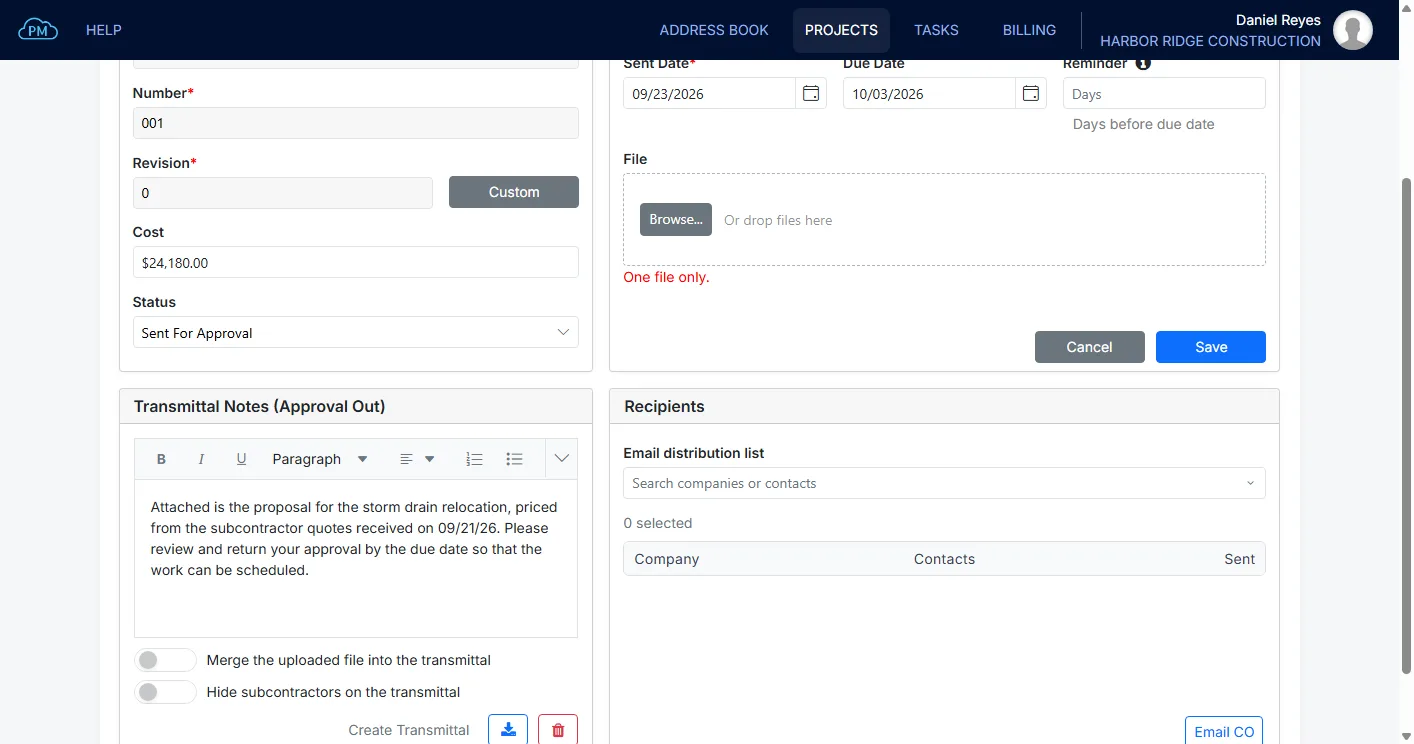
Once you have the costs, you can submit the change order to the owner or the architect for approval. Cloud PM records the date it was submitted and reminds you before the answer is due. When you receive the answer, you enter the date and the decision, so the log shows whether the change was approved or rejected. You can attach your own file to the transmittal and leave out the subcontractor costs, so the owner sees only the change and the cost you are asking for.
Transmittals and the Record
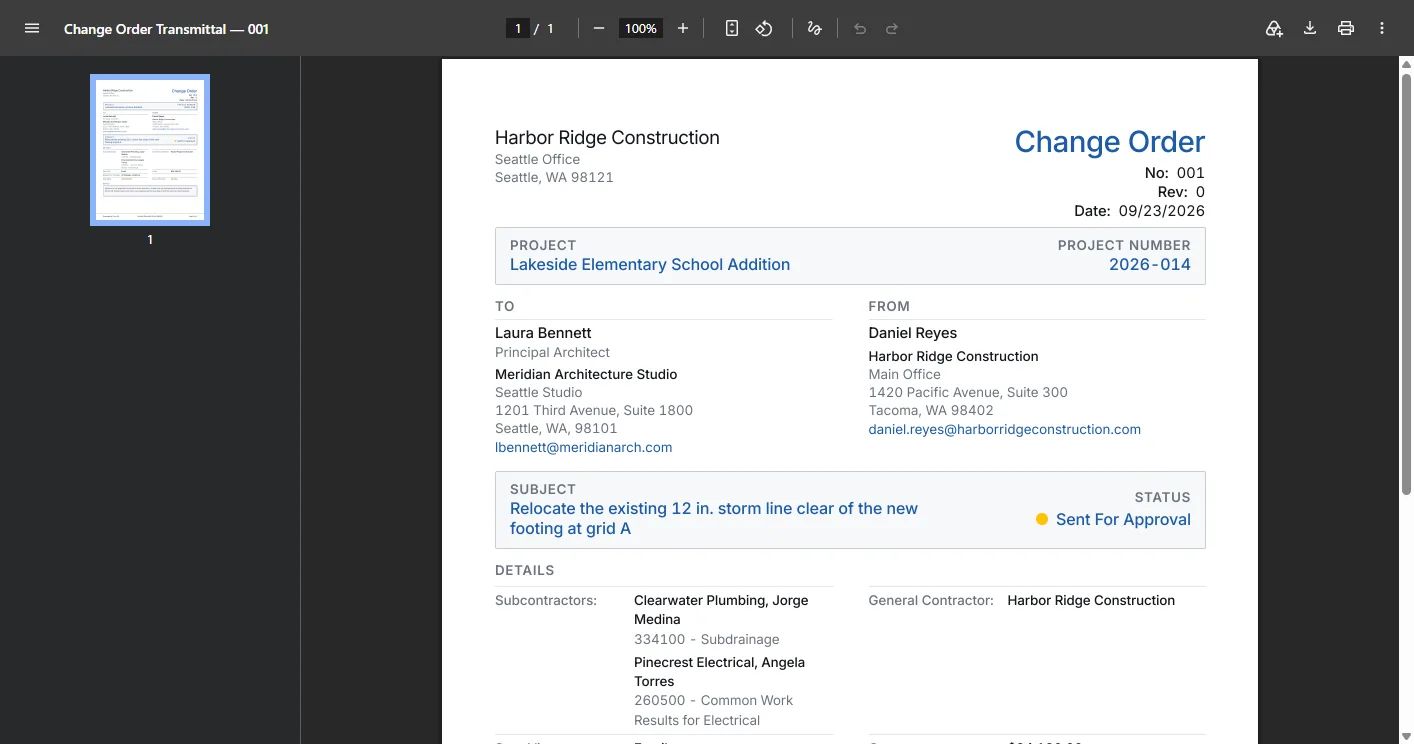
You can create the transmittal sheet for the current step and email it to the contacts you choose from the project directory. Cloud PM records who received it and when, and every change order transmittal, to a subcontractor or to the owner, is kept in the Transmittal Log. Once the owner approves the change, you can add it to the contract, and the contract value is updated. A change that started as a question stays linked to its RFI, and you can create tasks for your team that appear on the Tasks & Reminders page.
Why Choose Cloud PM for Change Order Management
Change orders can be disputed months later, so Cloud PM keeps the pricing, the approval and the paperwork on the change order itself. That way you can always show what each subcontractor quoted, what you asked the owner for and what the owner decided. The subcontractors and the design team have free accounts as outside users, and plans start from $40 a month.
-
Every Cost Is Recorded
Cloud PM keeps each subcontractor's proposal with its cost and its file, so you know exactly what was quoted and when. When the owner questions a cost months later, you have the full record from the first cost to the approved change order. You can export the log to Excel or PDF for a claim, an audit or a closeout package.
-
Changes Added to the Contract
When you add an approved change order to the contract, it is listed under Contract Changes with its date and cost, and it is included in the Contract Sum to Date. You bill exactly what the owner approved, without retyping numbers into a spreadsheet, and the change keeps its pricing history.
-
Your Team, Clear Permissions
You can give your own users Read, Write and Delete permissions for each project. The subcontractors pricing the change and the design team approving it get free accounts as outside users, with Read and limited Write access. Everyone works from the same change order, and nobody sees more of the project than they need.
Construction Change Orders FAQ
A change order is a signed agreement that changes the contract: the work, the cost, the schedule, or all three. It starts when something on site differs from the drawings and specifications, and it becomes binding once the owner approves it.
PCO stands for proposal for change order. It is the stage before the change is approved: the change has been identified and priced, and it is waiting for a decision. Cloud PM tracks a change from that point, so the pricing history is kept with the approval rather than in a separate file.
A PCO is the proposal, a change order is the decision. In Cloud PM, the same record covers both. It starts as a proposal with the subcontractor costs, and it becomes a change order once the owner or the architect approves it.
The owner, or the architect acting for the owner, depending on what the contract says. The general contractor prepares it from the subcontractor proposals and submits it for approval.